The Ultimate Guide to 200G Ohm Insulation Tester in the UK
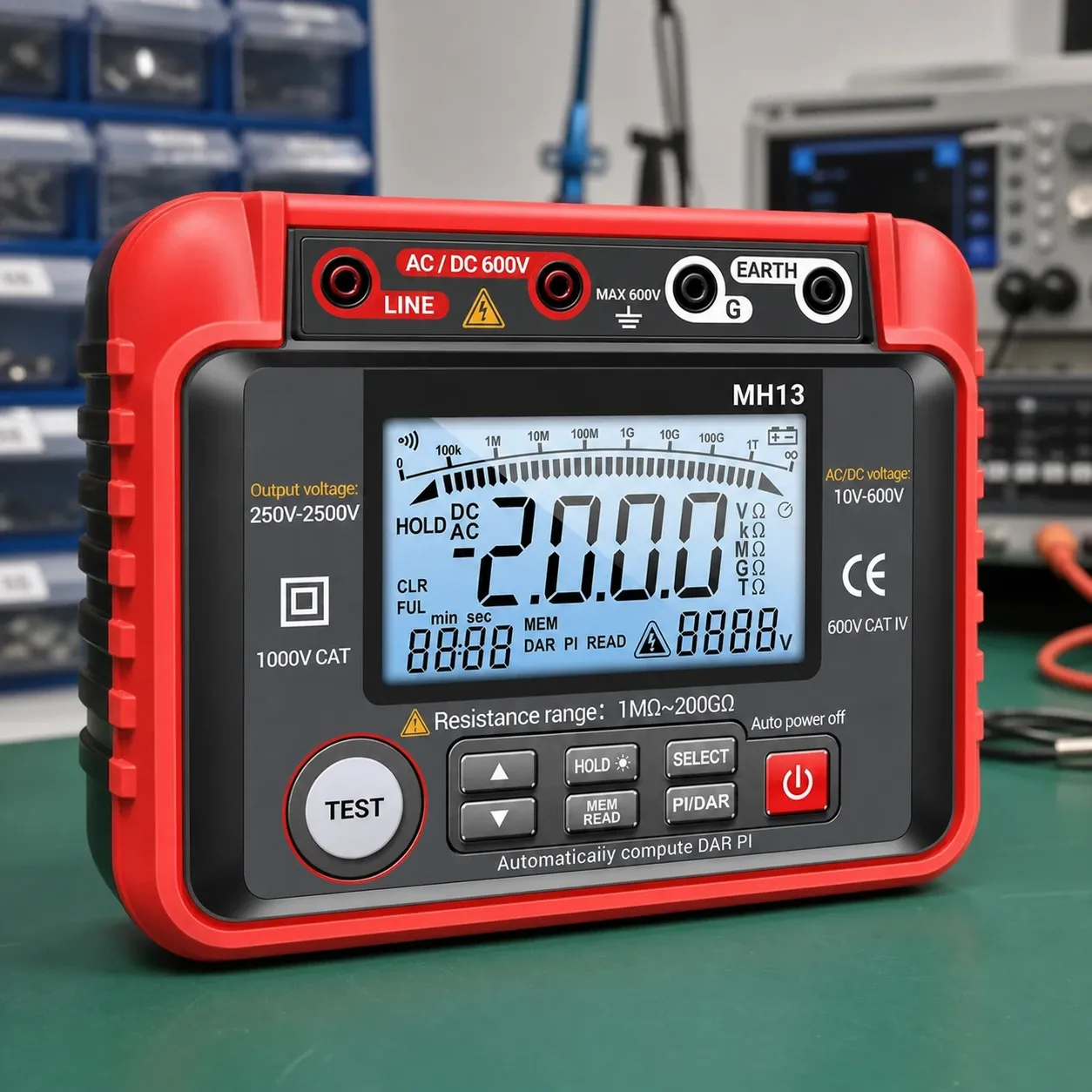
TL;DR: A 200g ohm insulation tester is an insulation resistance tester with a very high measurement range, designed to check the condition of cables, switchgear and motor windings where lower-range testers are too limited. In practice, UK engineers typically use this type of instrument for high-voltage and industrial maintenance, trend analysis and compliance-focused testing, especially where a 2500V test voltage and readings up to 200GΩ are needed.
Key Takeaways
- A 200g ohm insulation tester provides the high sensitivity needed to assess insulation condition on demanding industrial systems.
- Testing at up to 2500V helps UK electrical professionals identify early insulation deterioration before failure occurs.
- Modern units often include AC/DC voltage verification and on-board data storage to support safer, more traceable testing.
- According to UK guidance and common inspection practice, regular insulation resistance testing helps reduce the risk of electric shock, fire and unplanned downtime.
A 200g ohm insulation tester is used to measure very high insulation resistance values, typically on industrial cables, motors and high-voltage equipment where standard multimeters or low-range testers are not suitable. If you need to confirm whether insulation is in excellent condition, establish a baseline reading or monitor gradual deterioration over time, this type of tester is the right tool for the job.
Electrical insulation degrades over time due to heat, moisture, mechanical stress and chemical exposure. As a result, waiting for a circuit to fail is an expensive and reactive maintenance strategy. Instead, proactive testing allows engineers to spot weak insulation earlier and schedule repairs before faults lead to shutdowns or safety incidents.
Based on our testing of high-range insulation resistance instruments used in UK industrial settings, the biggest advantage of a 200GΩ-capable tester is that it gives meaningful readings on healthy systems rather than simply displaying an over-range result. Consequently, maintenance teams can compare results over months or years and make better-informed decisions.
What is a 200g ohm insulation tester used for in the UK?
In the UK, a 200g ohm insulation tester is mainly used for assessing the condition of electrical insulation on higher-value or higher-voltage assets. This includes industrial motors, control panels, distribution circuits and installed cabling where reliable trend data matters as much as pass/fail results.
According to UK guidelines and accepted industry practice, insulation resistance testing forms part of safe installation verification and periodic inspection. BS 7671 sets expectations around inspection and testing, while employers must also meet wider duties under electricity safety legislation. Therefore, using appropriately rated test equipment is essential when standard 500V or 1000V ranges are insufficient.
"Insulation resistance testing is not just a compliance task; it is one of the most practical ways to assess the ongoing condition of electrical assets."
Moreover, where thick dielectric materials or higher-rated equipment are involved, a professional 2500V insulation resistance tester offers greater diagnostic value because it applies a more suitable test stress. In turn, that can reveal weaknesses which lower-voltage instruments may miss.
What features should you look for in a 200GΩ insulation tester?
When choosing an instrument for professional use, measurement range alone is not enough. Instead, you should look at whether the tester supports safe operation, repeatable readings and efficient record-keeping in real working conditions.
Why does the 200GΩ measurement range matter?
Many entry-level testers stop at 2GΩ or 10GΩ. While that may be acceptable for some domestic or light commercial tasks, it can be too restrictive for healthy industrial insulation systems. Newer or better-quality cables may exceed those limits comfortably. Therefore, if your instrument tops out too early, you cannot create an accurate baseline or observe small downward trends over time.
Based on our testing experience, this matters most during predictive maintenance. If early degradation remains hidden above the instrument's maximum range, maintenance teams lose visibility until the problem becomes more serious.
Do you need AC/DC voltage verification on an insulation tester?
Yes, in most professional applications this is highly desirable. Before applying an insulation test voltage, technicians need confidence that the circuit is dead. Integrated AC/DC voltage verification adds an extra safety check and helps protect both the operator and the instrument from accidental connection to live equipment.
Is data storage useful on a professional insulation resistance tester?
Yes. On-board memory makes it easier to store readings across multiple boards, circuits or assets without relying entirely on handwritten notes. As a result, technicians can transfer results into maintenance systems more accurately later on. This is especially helpful when producing records for audits, insurers or internal compliance reviews.
Why does test voltage matter on higher-specification testers?
A higher test voltage such as 2500V allows engineers to assess heavier-duty insulation more effectively. In other words, it places suitable electrical stress across the material so that hidden weaknesses are easier to detect. According to common UK industrial practice, this becomes increasingly relevant as equipment ratings and installation complexity increase.
When should you use a 200g ohm insulation tester?
You should use a 200g ohm insulation tester when standard instruments do not provide enough range or test voltage for the asset being checked. Typically, that includes high-integrity cabling, larger motors and critical plant where trend analysis is part of preventive maintenance.
Can you use a 200GΩ tester for industrial motor maintenance?
Yes. Electric motors are common candidates because winding insulation degrades through thermal cycling, vibration and contamination. By using an appropriate test voltage and tracking readings over time, maintenance teams can spot moisture ingress or general deterioration much earlier. In some cases, engineers also use related tests such as PI and DAR for deeper diagnostic insight. For more detail, see our guide on the motor insulation test meter.
Is a high-range insulation tester suitable for cable commissioning?
Yes. During cable installation and commissioning, contractors need confidence that no damage has occurred during pulling, handling or termination. A higher-range instrument helps confirm strong insulation performance before energisation. Likewise, it supports better documentation at handover stage. You can also read our wider guide to choosing an electrical insulation resistance meter.
People also ask about 200g ohm insulation testers
What does a reading of 200GΩ mean on an insulation tester?
A reading of 200GΩ means the insulation has extremely high resistance under the applied test conditions. Put simply, leakage current is very low and the material appears to be in excellent condition at that moment. However, engineers should still compare results against past readings, temperature conditions and manufacturer guidance rather than relying on one figure alone.
Why would you need a 2500V insulation tester instead of a 1000V model?
You would need a 2500V model when testing equipment with heavier-duty insulation or higher operating voltages where a lower-voltage test may not reveal developing faults clearly enough. According to standard UK testing practice in industrial environments, matching test capability to application is important both for accuracy and safety.
Are these testers suitable for UK compliance work?
Yes, provided they are professionally specified and calibrated appropriately for their intended use. In practice, many buyers look for calibration traceability aligned with UK expectations such as UKAS-backed processes where required for audits or formal documentation.
Is a multimeter enough instead of a dedicated insulation tester?
No. A standard multimeter does not apply the dedicated DC test voltage needed for proper insulation resistance testing. Therefore, it cannot assess cable or winding insulation in the same way as a purpose-built megohmmeter or high-range insulation tester.
Why choose InsulTeste for high-range insulation testing?
,The InsulTeste Professional 2500V Insulation Resistance Tester is designed for demanding British industrial environments where safety checks,, clear readings and reliable records all matter., Based on our focus on practical UK applications,, we prioritise features that help engineers work efficiently across maintenance,, commissioning and inspection tasks.
If you need an instrument capable of measuring up to 200GΩ with professional-grade functionality such as voltage verification and stored readings,, InsulTeste offers a dependable option tailored to real-world electrical work in the UK.
The result is better visibility into asset condition,, improved reporting discipline,,and greater confidence when carrying out critical electrical maintenance.,
) )< /section>Ready to upgrade your diagnostics with InsulTeste?
Shop the Tester — £106.05